Scan the label
Point the camera at a label and that container opens: everything in it, the place it lives, and anything anyone else has added since. Without the app, the label sends you to install it.
Scan It · Store It · Find It
Photograph what goes into a bin and FindMyBins writes the list. Print its QR label and stick it on. Search later and the app names the container it is in, and exactly where that container lives.


Free to start. No ads, ever.
“first aid kit”
002 Camping Gear
Garage Shelf B
Not the room — the bin. One photograph of what you are about to put away, and a vision model proposes the list, marking how sure it is about each line. Nothing enters your inventory until you accept it.

You confirm or reject each line. Nothing is saved until you confirm it , and a rejected suggestion is never stored.
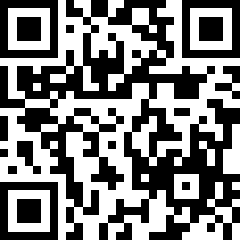
002
Camping Gear
A sheet of labels prints on ordinary letter paper. Every container takes the next number in sequence, allocated on the server so two people cannot both create 002 at the same moment. Retire a container and its number stays reserved — numbers are never quietly reused.
The label then outlives everything you do to the container. Rename it, renumber it, move it to another room, archive it, and the same label still opens the right one. A stranger who photographs it learns nothing: an unauthorised scan returns exactly what a label that does not exist returns.
Once a container is labelled there are two ways to reach what is inside it — and neither of them is opening the bin.
Point the camera at a label and that container opens: everything in it, the place it lives, and anything anyone else has added since. Without the app, the label sends you to install it.
Type what you are looking for. Search tolerates typos, understands plurals and synonyms, and marks exact matches apart from possible ones. The answer is not a list of maybes — it names the container and tells you where that container is.
The garage is fine — you just can’t find anything in it. Invite the rest of the household and everyone finds things without asking.
When the one person who knows where everything is takes a holiday, the stockroom shouldn’t stop. Shared workspace, roles, searchable in seconds.
Volunteers change every year. Your storage shouldn’t have to be relearned every year with them.
| Free $0 | Pro $9.99/mo · $95.00/yr | |
|---|---|---|
| Containers | 10 | Unlimited |
| Members | 2 | Unlimited |
| Locations | 2 | Unlimited |
| Storage | 500 MB | 50 GB |
| AI photo cataloging | 5 to try | Included, 60 an hour |
| Natural-language search | — | Included |
Pro is an auto-renewing subscription, charged at confirmation of purchase and renewed unless cancelled at least 24 hours before the period ends; manage or cancel it in your account settings. The trial runs 14 days, needs no payment method, and is one per account. Cancelling deletes nothing: you keep viewing, searching and scanning your inventory, and only creation and the paid features pause. See the Terms and Privacy Policy .
No ads and no ad trackers. The app carries no analytics SDKs at all. Your search history is private to you and never visible to workspace admins. Photos are stored privately and only sent for AI analysis when you ask, and are never used to train AI models. Delete your account whenever you like, from inside the app.
You photograph the bin; the app writes the list. The upkeep is a photo, not a spreadsheet.
One bin, one label, one photo — under a minute. Do the worst bin first and stop there if you like.
Photos are private and only go to AI when you tap Analyze. No ads, no trackers, no analytics, and no model training on what you own.
It proposes; you confirm. Nothing enters your inventory until you accept it, and every suggestion carries a confidence marker.
Free covers ten containers and two people honestly. Pay when your garage is bigger than that.
Nothing is deleted. You keep viewing, searching and scanning; only creation and the paid features pause.
Get the app and label your first bin in under a minute.
Free to start. No ads, ever.